
🌱
Seeds
Seeds for snacking, cooking and sprinkling.
Explore other categories
Seeds for snacking, cooking and sprinkling
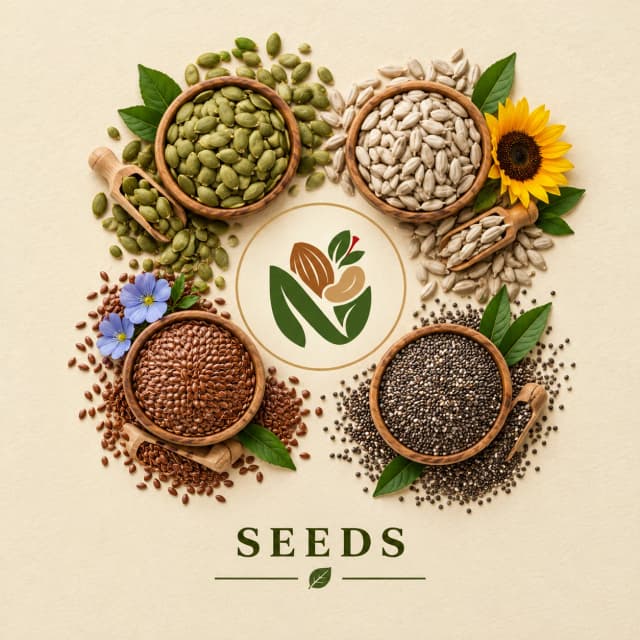
Seeds are an easy way to add crunch and nutrition to everyday food. We stock four: chia, flax (alsi), pumpkin and sunflower. Each is eaten a little differently, and that difference matters.
How to eat each seed
Seed | Best way to eat it | How much a day | Good to know |
|---|---|---|---|
Chia | Soaked in water, milk or yoghurt | 1 to 2 tablespoons | Swells into a gel; soak it before eating |
Flax (alsi) | Freshly ground | 1 to 2 tablespoons | Whole flax often passes through undigested |
Pumpkin | Raw or dry-roasted | A small handful |
Chia: always soak it
Chia seeds absorb many times their weight in liquid and turn into a soft gel. Stir a tablespoon or two into water, milk or yoghurt and leave it for at least fifteen minutes, or overnight for chia pudding. Eating large amounts dry is best avoided, because the seeds swell as they take on water.
Flax: grind it
Flax has a hard outer coat that the body often cannot break down, so whole flax can pass straight through. Grind it in a spice grinder just before eating, or grind a week's worth at a time. Add it to rotis, parathas, smoothies, porridge or curd. Ground flax goes rancid quickly, so keep it in the fridge.
Pumpkin and sunflower: ready to eat
Both are good straight from the pack. To bring out their flavour, dry-roast them in a pan for three or four minutes over a low flame, stirring until they smell nutty, and let them cool before storing.
Ideas for every day
- A spoonful of mixed seeds on poha, upma, salad or raita
- Ground flax kneaded into roti or paratha dough
- Chia soaked overnight in milk, with fruit in the morning
- Pumpkin and sunflower seeds in a homemade trail mix with dry fruits
How to store seeds
Keep whole seeds in airtight jars in a cool, dark cupboard. Seeds are rich in natural oils, so in summer, or once opened for a while, the fridge keeps them fresh for longer. Keep ground flax in the fridge and use it within a week or two.
Common questions
Should I soak flax seeds?
Grinding matters more than soaking. Soaking softens them, but ground flax is what your body can actually use.
Can I eat chia seeds without soaking?
A light sprinkle on wet food is fine, but soaking is the better habit: the seeds swell as they absorb liquid.
Do seeds go bad?
They can go rancid. A bitter, sharp or paint-like smell means it is time to throw them out.